Treasury Sec. Scott Bessent Rules Out CBDC Under Trump, “CLARITY Act Is Coming”
"There will be no central bank digital currency." With that five-word line at the May 28 White House briefing, Treasury Secretary Scott Bessent didn't just close the file on a decade of Fed…
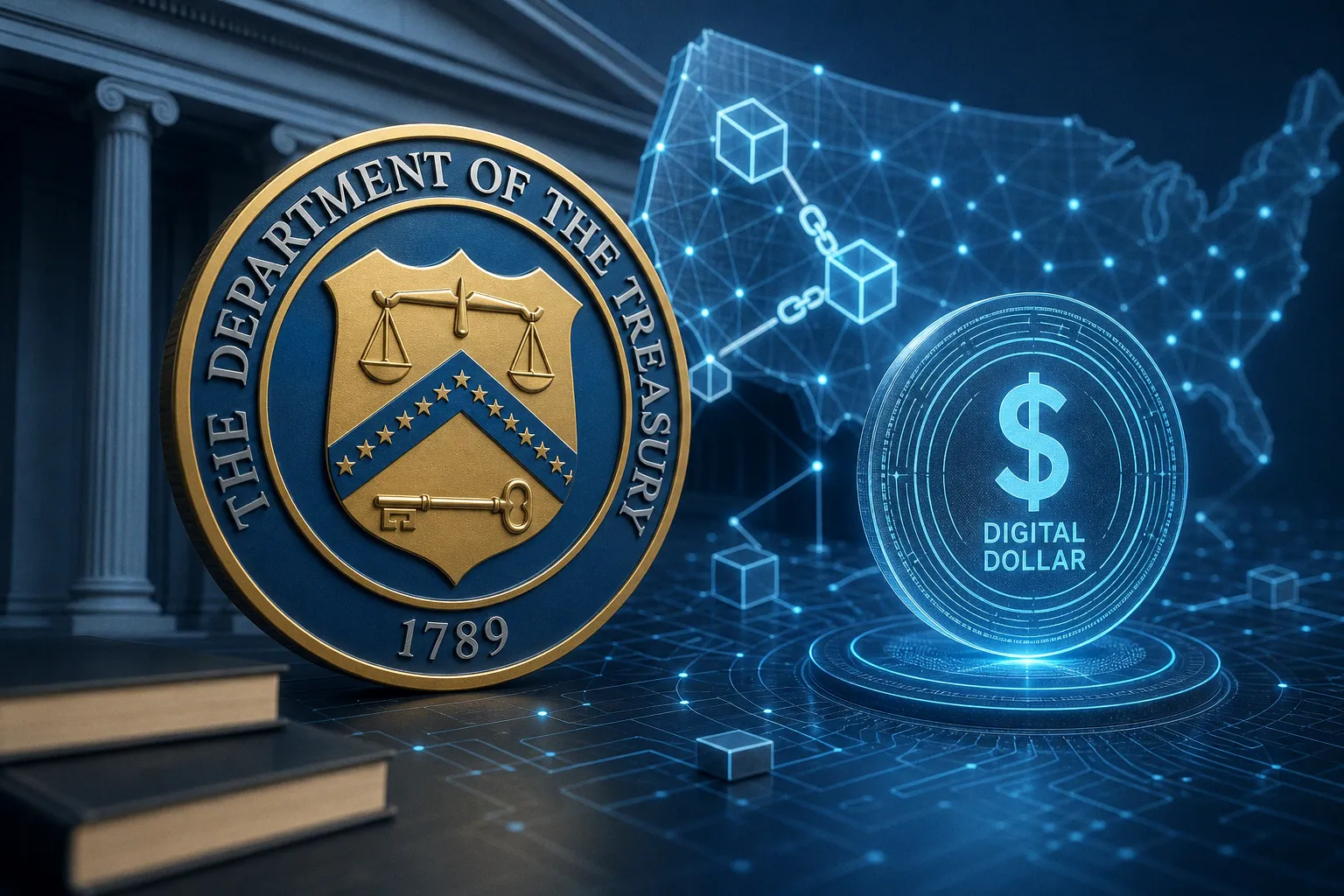
"There will be no central bank digital currency." With that five-word line at the May 28 White House briefing, Treasury Secretary Scott Bessent didn't just close the file on a decade of Fed experimentation — he redrew the regulatory perimeter for every institutional desk allocating to digital assets. The administration's pivot toward private stablecoins and tokenized real-world assets is now policy, not preference, and the CLARITY Act is the statutory vehicle meant to lock it in before the August recess.
The CLARITY Clock
H.R. 3633, formally the Digital Asset Market Clarity Act, has already cleared two procedural hurdles: a 294-134 House floor vote in July 2025 and a 15-9 Senate Banking Committee advance on May 14, 2026. What remains is the floor calendar. With the Senate returning July 17 and the August recess looming, Bessent's public push reads as a direct signal to leadership that the White House wants a vote before the window closes. Sixty votes will be required to overcome the filibuster, and that is precisely where institutional lobbyists are now concentrating capital and face time.
Closing the Arbitrage Window
The CBDC rejection isn't ideological theater — it's a directive about where Treasury wants capital formation to land. By ruling out a sovereign digital dollar over surveillance concerns, Bessent framed the CBDC as "the first step toward tracking," effectively outsourcing monetary infrastructure to the private sector and prioritizing stablecoins plus tokenized RWAs as the foundation of the U.S. digital financial system. For trading desks, custodians, and market makers, that translates into a narrower compliance perimeter with a wider product surface: federally defined asset classifications, registered venue standards, and a clarified legal status for stablecoin issuers that the GENIUS Act only partially nailed down last year.
What Institutional Players Should Track
The next ten days are the entire trade. Watch the Senate floor schedule for H.R. 3633 movement, any committee amendments that tighten or expand the definition of a "digital asset intermediary," and whether Bessent's anti-CBDC posture holds against the Fed's ongoing research work. Allocators with exposure to U.S.-domiciled exchanges and qualified custodians should model two scenarios: a clean August passage that compresses regulatory risk premia across the stack, or a punt to September that reopens the window for political uncertainty and capital flight offshore. For anyone positioning around NFT marketplace liquidity and tokenized collectibles, the CLARITY framework will decide whether those assets fall under securities, commodities, or a bespoke category — and that single classification reprices the entire secondary market.