Modern Banking Trends: How AI, Stablecoins, and Habit-Building Strategies Are Redefining Financial Services
Regulatory frameworks such as the GENIUS Act are being framed as the unlock that lets mainstream banks move stablecoins from “innovation lab” to settlement strategy.
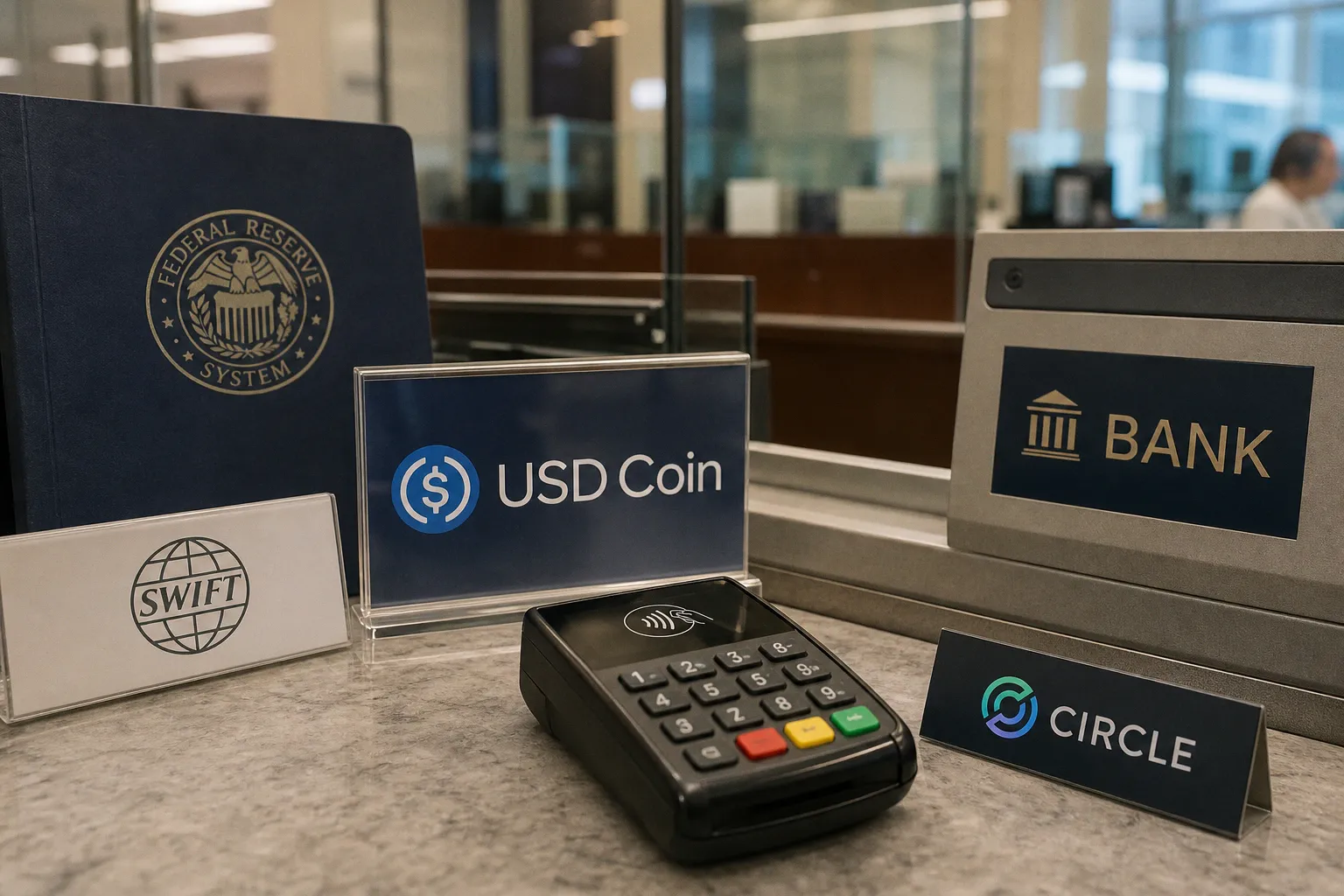
Stablecoins are becoming a bank balance-sheet question
The important signal is not that cryptocurrency is “back.” It is that stablecoins are being discussed as a practical tool for regulated institutions, especially credit unions and community banks trying to protect deposit bases while modernizing cross-border payments.
Evotek points to new regulatory frameworks, including the GENIUS Act, as clearing space for mainstream financial institutions to engage with digital currencies. It also cites moves by Mastercard as evidence that stablecoins are being pulled into the traditional settlement ecosystem.
For crypto market participants, that changes the incentive map. If banks can use stablecoins to improve payments without surrendering the customer relationship, the competitive fight shifts from pure token distribution to regulatory access, compliance-grade infrastructure and bank-integrated liquidity.
The risk is regulatory arbitrage dressed up as innovation. Institutions will need to prove that stablecoin activity can sit inside existing risk frameworks rather than creating a parallel payments layer that supervisors later force them to unwind.
AI and customer habits are now revenue infrastructure
Evotek’s brief says banks are moving beyond basic chatbots toward “agentic” AI systems that manage customer support and support revenue growth. The capital logic is straightforward: automation is no longer just a cost-control story; it is being positioned as an operating model for customer acquisition, service and retention.
That connects directly to the second trend: banks are retreating from expensive sign-up bonuses, aggressive pricing and high-yield promotions as a primary growth engine. The argument is that bought relationships produce high attrition, while habit-forming services — financial wellness tools, personal finance interfaces and personalized engagement — make the bank part of the customer’s daily routine.
For crypto firms, this is the uncomfortable benchmark. Wallets, exchanges and stablecoin apps are not just competing on yield, fees or asset access. They are competing against banks that are trying to own the primary financial institution relationship through utility, identity, onboarding and embedded financial management.
That makes distribution quality more important than launch noise. A new project entering this market has to answer a harder investor question: does it create repeat usage, or is it merely renting attention through incentives?
Institutional banks remain the macro gatekeepers
A separate AD HOC NEWS item frames Deutsche Bank AG as a major European banking group with operations across Europe, Asia and the Americas, serving clients from multinationals to individual consumers. The note highlights balance-sheet strengthening, structural simplification, capital discipline, cost control and risk management as long-term strategic priorities.
That context matters because global banks remain the channels through which capital markets, international payments and cross-border trade are routed. AD HOC NEWS also notes that Deutsche Bank’s business spans corporate and investment banking, retail and wealth management, with underwriting, advisory and trading sensitive to market volatility but able to generate fee and commission income during active issuance and deal-making periods.
The crypto takeaway is pragmatic: institutional adoption will not be decided by slogans about decentralization. It will be filtered through capital ratios, asset quality, liquidity rules, operational controls and supervisory expectations. Digital transformation is already part of large-bank strategy, but every new rail has to survive compliance, governance and risk-adjusted return tests.
What to watch now: whether stablecoin pilots are tied to real payment flows, whether banks use AI to deepen customer control rather than merely cut service costs, and whether crypto infrastructure providers can meet the legal and operational standards that global institutions require before they move meaningful capital.