U.S. State Department Integrates Bitcoin into Global Diplomatic Strategy
KuCoin News reports that the program will use limited-term assignments rather than permanent government hiring.
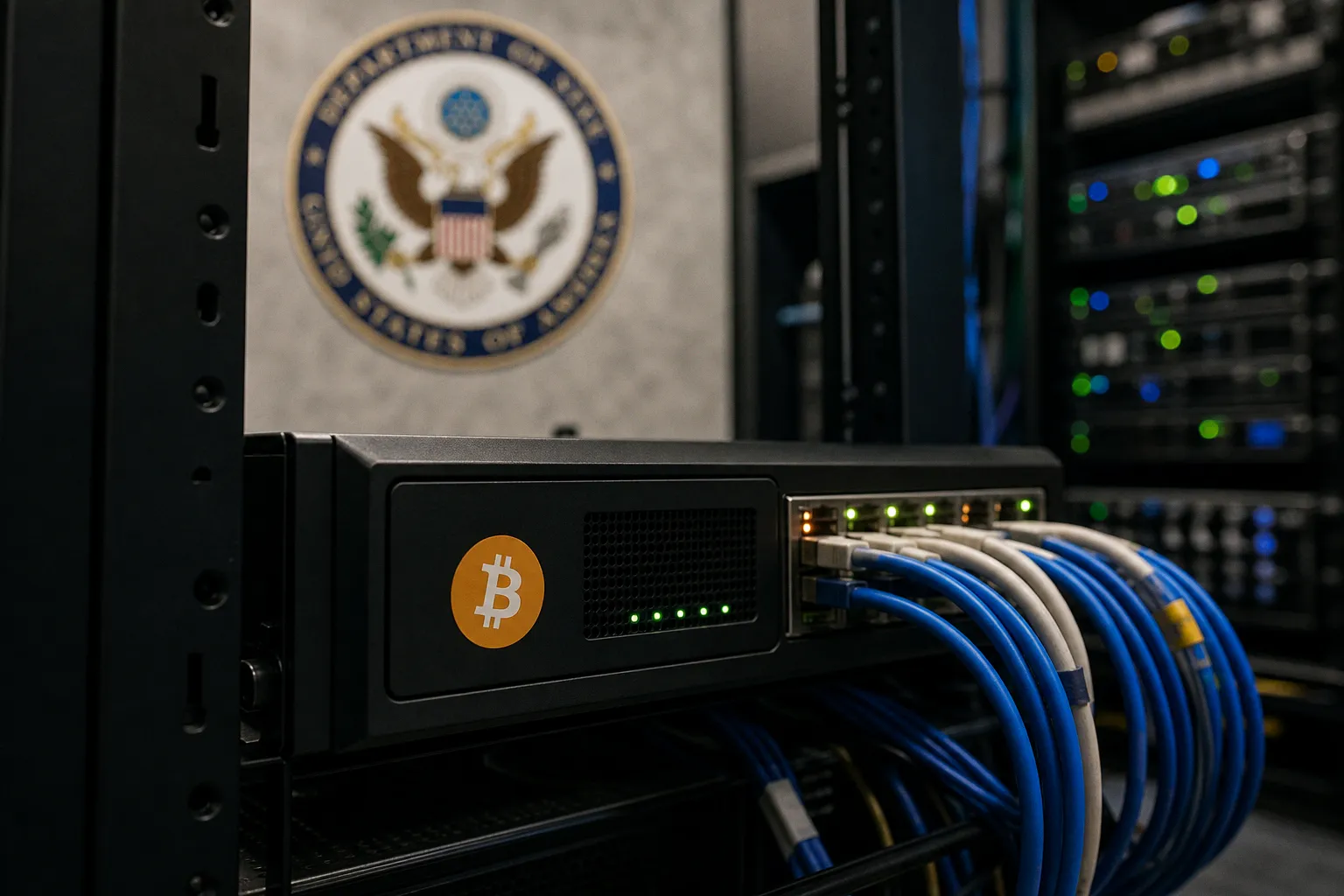
According to KuCoin News, the U.S. State Department has launched the Freedom Tech Excellence Program, a public-private initiative that places private-sector specialists inside diplomatic operations working on digital freedom. The Bitcoin Policy Institute is among the program’s founding partners, positioning Bitcoin alongside encryption and privacy tools in a foreign-policy setting rather than solely within the familiar market-regulation perimeter.
That is the relevant shift for crypto markets: not a funding announcement, not a Treasury rulemaking, and not a new legal status for Bitcoin—but a potential change in how a major government institution allocates policy attention, expertise and diplomatic capital.
Bitcoin enters the technology-diplomacy channel
Embedded personnel are expected to contribute to policy work involving online expression, counter-surveillance measures and responsible AI governance, with financial freedom and censorship-resistant technology explicitly in scope.
The founding group reportedly includes the Bitcoin Policy Institute, Palantir Technologies, Anduril Industries and the Victims of Communism Memorial Foundation. That combination matters. It brings Bitcoin advocacy into the same operational conversation as defense technology, surveillance risk and human-rights diplomacy—an institutional context far removed from the usual debate over exchange supervision, token classifications or investor disclosures.
For the industry, the immediate incentive is clear: policy narratives can migrate. If Bitcoin is increasingly evaluated as infrastructure for individual financial autonomy in restricted environments, the relevant capital and regulatory questions widen beyond domestic trading markets. But narrative access is not regulatory arbitrage. The program’s stated focus does not itself alter U.S. securities, banking, sanctions or tax treatment.
The real test is policy transmission
The key variable is whether temporary placements generate recommendations that survive beyond the program itself. KuCoin News notes that Freedom Tech’s influence could depend on political continuity, since such arrangements can be restructured or defunded without congressional action.
Institutional players should therefore avoid pricing in a policy breakthrough before there is evidence of transmission: formal State Department positions, interagency coordination, or concrete adoption of recommendations elsewhere in government. The State Department can influence diplomatic priorities; it does not unilaterally rewrite the regulatory frameworks that determine custody, market access or compliance exposure.
The Bitcoin Policy Institute is also reported to be hosting a Freedom Tech DC summit on September 22–23, 2026. That event may offer the first public signal of whether the program is becoming a durable policy platform or remains a narrowly scoped expert-exchange mechanism.
What the market should watch
The practical read-through is political rather than transactional. Watch for official language that treats censorship resistance, privacy technologies and cross-border financial access as connected policy categories; that would be more consequential than broad rhetoric about “digital assets.”
For funds, infrastructure providers and policy teams, the central risk-management task is to separate diplomatic relevance from legal effect. Freedom Tech may create a new channel through which Bitcoin’s strategic case reaches government decision-makers. Until that channel produces durable institutional outputs, however, the market implication is optionality—not a completed regulatory repricing.