US CBDC Ban Becomes Law Without Presidential Signature
A statutory prohibition on Federal Reserve-issued CBDC slid into law through the constitutional ten-day pocket-veto window, riding the bipartisan ROAD to Housing Act after President Trump declined to sign.
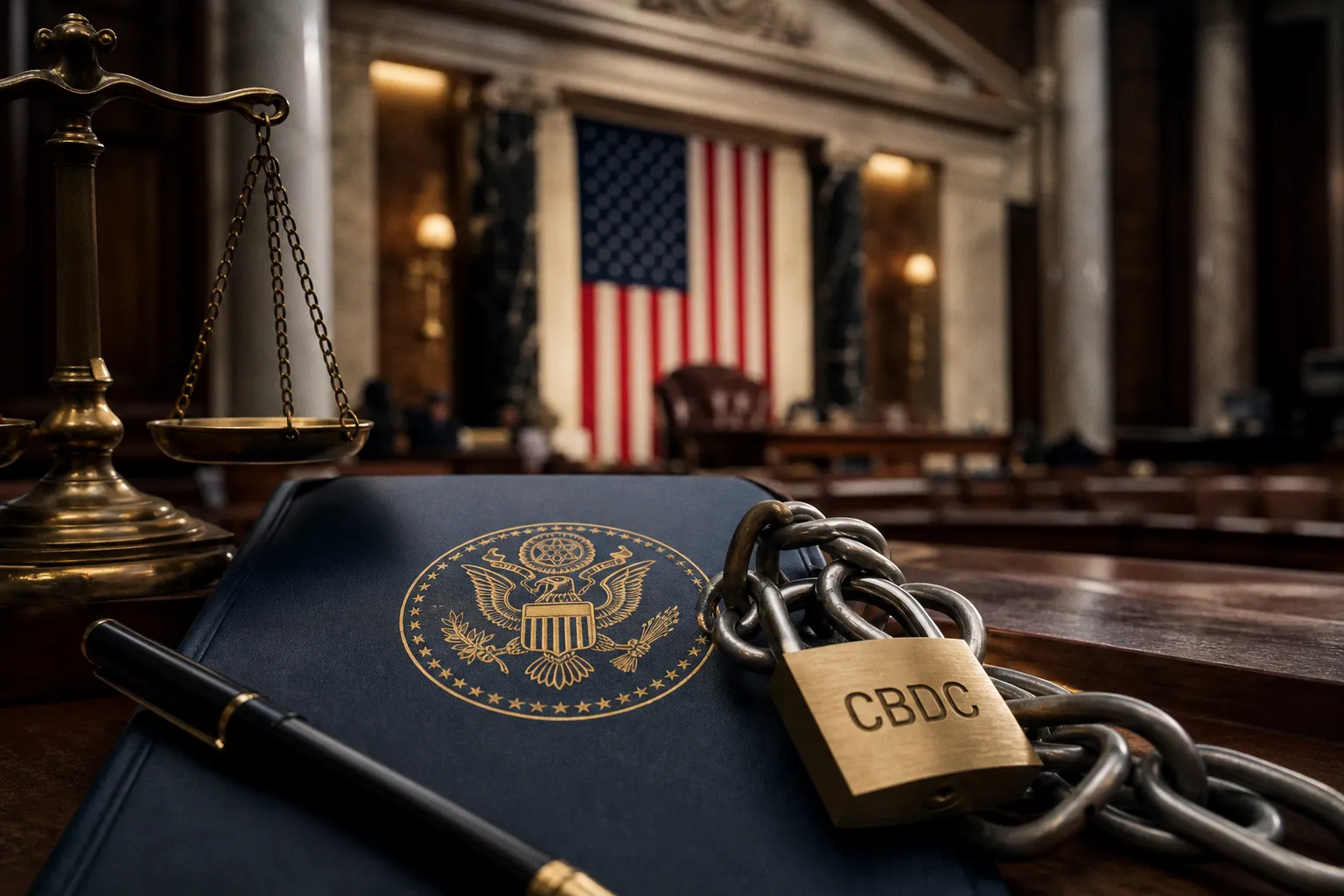
The Statutory Mechanism
The provision activates via Article I's default enactment rule: congressional legislation that the president neither signs nor vetoes within ten days becomes law absent specified recess conditions. Trump had publicly conditioned his signature on passage of the separate SAVE America Act restricting non-citizen voting, leaving the ROAD to Housing Act — originally framed around housing affordability and supply-side support — unsigned. Through that political standoff, the embedded CBDC clause passed almost incidentally, imposing a hard statutory floor against any Fed-issued central bank digital currency absent fresh congressional authorization.
Capital Allocation Recalibration
For institutional desks, the regulatory read is straightforward. With a state-backed digital dollar now barred, the competitive vacuum migrates to private-layer assets: Bitcoin and Ethereum absorb the ideological tailwind, while dollar-pegged stablecoins inherit the structural role of on-chain settlement rail. Major stablecoin issuers inch toward de facto monetary infrastructure — a position that will amplify counterparty and reserve scrutiny even as it entrenches dollar dominance through private rails. Long-running privacy-erosion arguments deployed against on-chain finance lose a structural pillar, though the broader bank-disintermediation contest shifts rather than disappears.
Macro and Policy Watchpoints
Three file lines now matter for any allocator. First, with the Fed legislatively locked out of direct digital-dollar issuance, perimeter-setting authority over dollar-tokenized liquidity migrates to the Treasury, OCC, and CFTC — making stablecoin reserve composition, redemption mechanics, and bank-counterparty exposure the next contested frontier. Second, China continues scaling its digital yuan pilot, a competitive asymmetry that complicates any near-term US sanctions-enforcement or cross-border payments edge projected through digital rails. Third, the law crystallizes how crypto policy now travels by attachment to must-pass legislation, raising the probability that future digital-asset provisions